
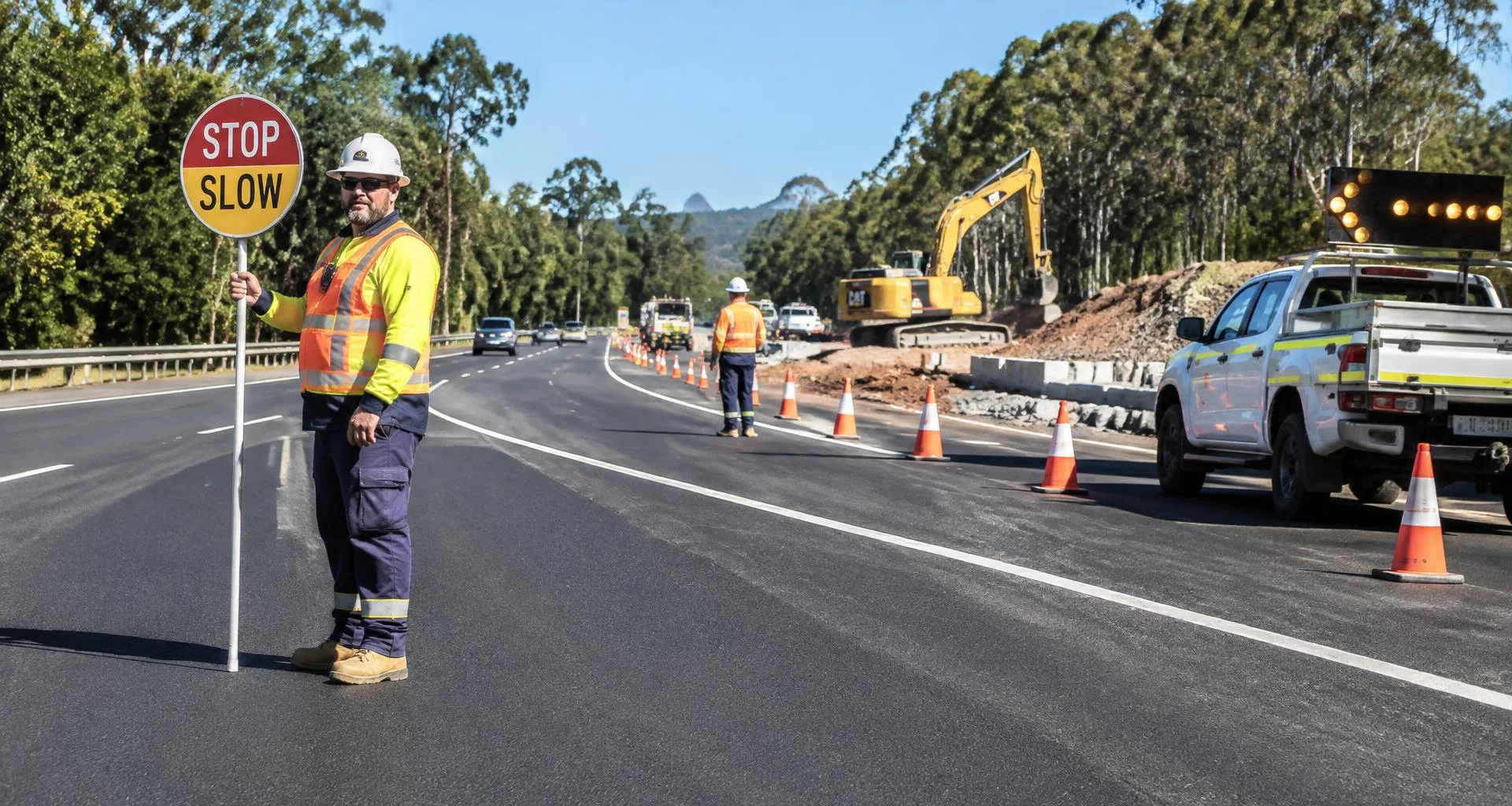
AI-generated supporting illustration. Always check current authority requirements for your specific job.
Start with the road owner
First identify whether the road is controlled by Sunshine Coast Council or the Queensland Department of Transport and Main Roads. Major corridors and local connecting streets can have different owners. A road closure may also affect bus services, adjoining properties or emergency access. Establish these interfaces before choosing a closure footprint and detour route.
Define exactly what you need to occupy
Describe the construction activity, dates, work hours and area required for plant, materials and public protection. A full closure, partial lane closure and footpath occupation are different arrangements. Concrete pumps and crane setups can extend beyond the building frontage, while excavations may need controls outside active work hours. Your application should accurately describe each stage.
Prepare the traffic documentation
The authority may request a TMP, TGS drawings, work program, location plan and stakeholder information. The documents should explain access for residents, businesses, pedestrians and emergency services. A detour needs to be suitable for the vehicles expected to use it. Include proposed signs and the process for reopening once the work is complete.
Submit through the current authority process
Sunshine Coast Council publishes road and footpath permit information on its website. State-controlled road activities must follow the relevant TMR process. Fees, supporting documents and assessment timeframes can change. Check the current application instructions and allow time for assessment and possible revisions. ETG does not guarantee an approval period or issue permits on behalf of an authority.
Read the conditions before booking
An approval can specify work windows, communication requirements, access arrangements and documentation that must be on site. Compare those conditions with the actual construction program. If dates or methods change, ask whether the approval needs amendment. A controller booking or equipment hire order does not replace the authority’s permission.
Coordinate implementation and reopening
Brief the site supervisor and traffic crew on the current drawings and conditions. Agree who can authorise a change or suspend the work. Before normal traffic returns, inspect the road and manage removal of temporary controls. ETG can help scope road closure planning, detour arrangements and traffic resources. Supply the address and existing documents when requesting a quote.
- TMR temporary traffic management standards
- TMR traffic controller accreditation
- Sunshine Coast Council road and footpath permit information
This guide is general information, not an approval or a site-specific traffic plan. Fees, requirements and conditions are determined by the relevant authority.