
What a traffic guidance scheme shows
A traffic guidance scheme, or TGS, is a site-specific drawing that communicates the temporary traffic arrangement. It can show advance warning signs, taper locations, work areas, traffic controller positions, temporary pedestrian routes and access points. In Queensland, the arrangement must be considered against the applicable temporary traffic management standards and the requirements of the road authority. ETG supports TGS design for construction, maintenance and changing work fronts across South East Queensland. A useful drawing is clear enough for an appropriately qualified implementer to set out and check on site.
Design around actual site conditions
Useful design information includes road widths, posted speed, intersections, bends, crests, driveways, bus stops and the position of the work area. A satellite image alone may not reveal sight restrictions, pedestrian demand or temporary construction access. Concrete truck movements, excavator swing zones and storage areas should be identified early. Where a job has several stages, each stage may need a different scheme. Moving a work area or changing a closure length without review can create risks that the original drawing did not address.
From drawing to implementation
The designer and traffic management implementer have different responsibilities. The drawing needs to be reviewed against the actual site before installation, with changes managed through the agreed process rather than informal edits. Keep the current revision accessible to the supervisor and crew. We recommend confirming who holds the permits, who is authorised to implement the scheme, and how inspections and changing conditions will be recorded. TGS design does not replace a TMP where the broader management document is required, and it does not remove the need for road authority permission.
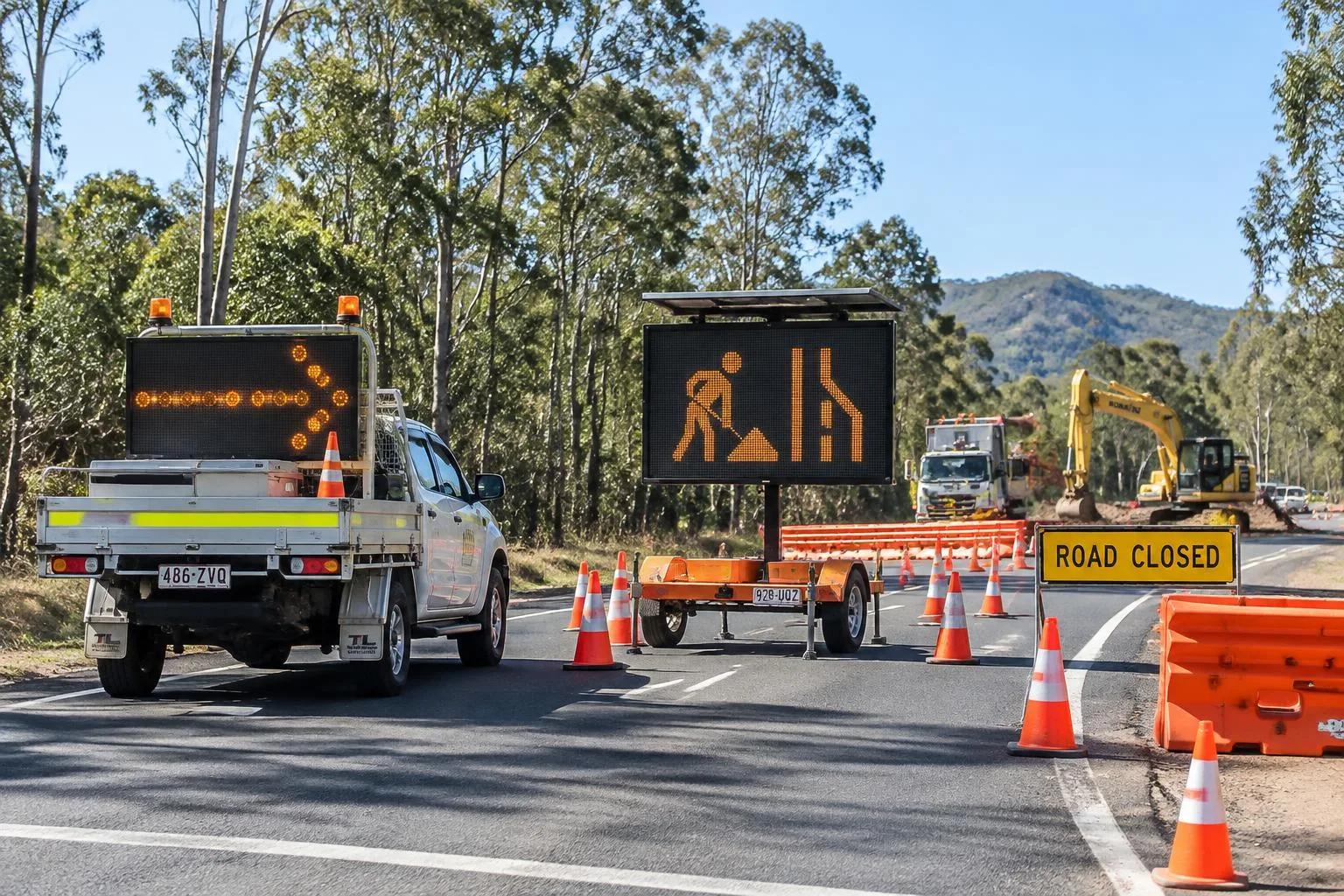
AI-generated illustration of a Queensland traffic management arrangement; not an ETG project record.
A coordinated process from enquiry to handover
Start by sending the location, scope and proposed dates. We review the traffic requirements with you and identify what further information is needed to prepare a meaningful quote. Where planning, permits, equipment and personnel are separate parts of the job, these should be confirmed individually so nothing is assumed to be included. The road authority sets approval conditions; the principal contractor remains responsible for its construction activities. Agree the work stages and the contact person for each responsibility before the site is established. During implementation, the crew should check the actual conditions against the current documentation and communicate any differences. Weather, traffic demand and plant movements may require a review. At the end of the activity, the handover should cover safe reopening and any controls that remain in place.
Queensland standards and site safety
Temporary traffic arrangements must be considered against the Queensland MUTCD Part 3, the Queensland Guide to Temporary Traffic Management and applicable TMR or council requirements. The qualifications needed depend on the role being performed: controlling traffic, implementing a scheme and designing a scheme are not interchangeable tasks. Pre-start briefings, equipment inspections, communication checks and a clear escalation process help keep the documented arrangement effective. ETG draws on the civil construction background of Exceed Concrete Construction, established on the Sunshine Coast in 1997. That connection helps us understand how concrete deliveries, excavation, changing work fronts and construction access affect traffic operations. Group quality, environmental and safety systems support a coordinated approach; project-specific documentation and current credentials should still be requested for your procurement review.
Coverage and a job-specific quote
Our head office is in Cooroy, with traffic management enquiries welcomed for Sunshine Coast, Noosa, Maroochydore, Caloundra, Gympie, Brisbane, Moreton Bay and Gold Coast works. Crew availability, travel, shift length, site complexity and equipment requirements affect the quote. Share any existing TMP, TGS or permit documents, including the current revision and approval conditions. If dates are not yet fixed, explain the likely program and decision points rather than selecting an arbitrary start date. For urgent or after-hours requirements, call 07 5449 8813 so the location and immediate risks can be discussed. A quote request does not confirm a booking or authority approval. ETG will clarify the proposed scope and next steps with you.
Current standards and permit information: